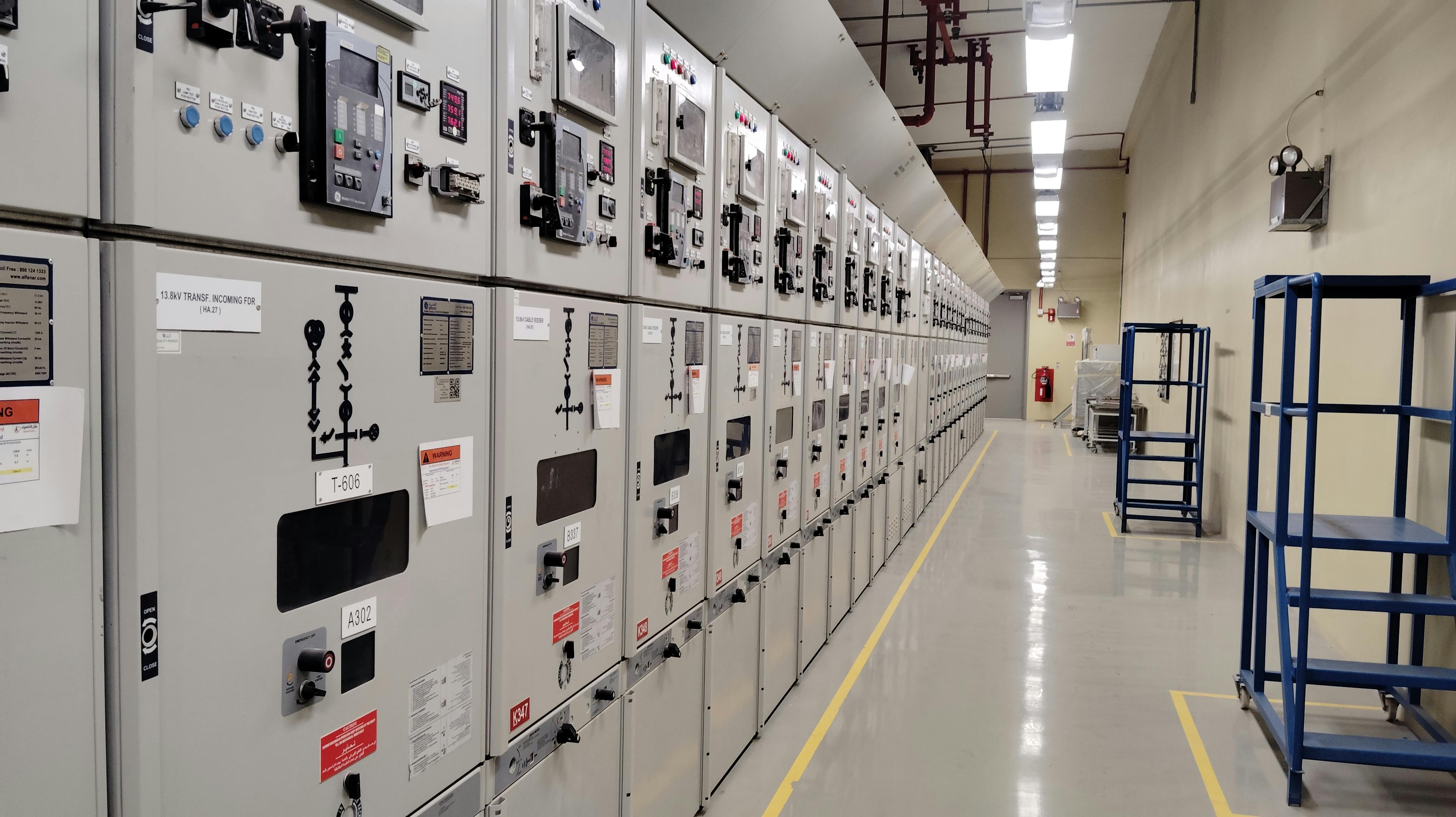
Electrical Failures That Start as Warm Spots
Switchgear, transformers, and distribution panels carry serious current. Under normal operation they run warm. Under fault conditions they run hot. A loose busbar connection, a corroded contact, an overloaded breaker: these create localized hot spots that do not announce themselves until something fails. Sometimes the failure is a tripped breaker and an inconvenient outage. Sometimes it is an arc flash that injures or kills the nearest worker.
The standard approach to thermal monitoring in electrical infrastructure is periodic thermographic inspection. A technician with a handheld thermal camera walks the facility on a schedule, typically quarterly or annually, and logs any anomalies. The problem is obvious: hot spots develop between inspections. A connection that reads normal in January can be glowing by March. By the time the next scheduled survey comes around, the damage may already be done.
The client, a solutions provider serving utilities and facilities operators, wanted something better. They needed a device that could sit in a switchgear room or substation, watch continuously, and flag thermal anomalies the moment they appeared. They also needed an audit trail. When an incident does occur, insurers and regulators want to know what the monitoring system saw, when it saw it, and whether alerts were issued. That record has to be tamper-evident.
Firmware, Mobile App, and Cloud Backend
Sequoia Applied Technologies is a Santa Clara software engineering firm that builds embedded systems, IoT platforms, and cloud infrastructure for industrial, cleantech, and enterprise software companies. This engagement covered the full vertical: device firmware, a cross-platform mobile app for onboarding and configuration, and a cloud backend for alerting and audit logging.
The firmware runs on an ESP32, a capable dual-core microcontroller with integrated WiFi that has become a workhorse in industrial IoT. The ESP32 does not have the horsepower of a Linux SBC, but it draws less power, costs less, and boots in milliseconds rather than seconds. For a device that needs to run unattended in an electrical enclosure for years at a stretch, those tradeoffs matter.
The architecture pairs a thermal sensor with an optical camera. The thermal sensor runs a continuous scan loop, evaluating every frame against configurable thresholds. When an anomaly is detected, the optical camera captures a reference frame so the alert includes not just a temperature reading but a visual showing exactly where the hot spot is located. This dual-sensor fusion cuts down on ambiguous alerts and gives maintenance teams something they can act on immediately.
The audit trail uses blockchain to ensure immutability. Every thermal event, every alert, every reading is logged to a distributed ledger. The record cannot be altered after the fact. For workers compensation disputes, insurance claims, and regulatory inquiries, that provenance matters. The client's customers needed to demonstrate that they had a monitoring system in place and that they responded to the alerts it generated.
Dual Sensors, FreeRTOS Tasks, and Immutable Logs
The device firmware is structured around FreeRTOS tasks. There is a thermal scanning task that runs the sensor in a tight loop, an optical capture task that fires when the thermal task flags an anomaly, a network task that handles WiFi connectivity and cloud communication, and an OTA task that manages firmware updates. Calibration data and sensor alignment profiles live in non-volatile memory, so a firmware update does not wipe the tuning work done during installation.
ESP32 dual-core microcontroller with integrated WiFi and Bluetooth. The device includes a thermal sensor module and an optical camera module mounted to provide overlapping fields of view. The enclosure is rated for installation in electrical rooms and industrial environments.
FreeRTOS provides task scheduling and timing services. Separate tasks handle thermal scanning, optical capture, network communication, and OTA updates. A circular queue interface passes data between the capture tasks and the alerting module. Watchdog timers ensure the device recovers from hangs without manual intervention.
Thermal events and alerts are logged to a blockchain-based ledger. The record is tamper-evident and can be produced for insurance claims, regulatory inquiries, or incident investigations. Each entry includes timestamp, sensor readings, alert status, and a hash linking it to the previous entry.
Secure over-the-air updates with automatic rollback if the new image fails checks. First-run onboarding uses AP mode: the device broadcasts a WiFi network, the installer connects via mobile app, and the app pushes WiFi credentials and cloud configuration. No laptop or serial console required in the field.
The mobile app handles device onboarding, fleet management, and alert viewing. Installers use it to configure new devices without needing physical access to the firmware. Facilities managers use it to see which devices are reporting anomalies and drill into the thermal and optical frames associated with each alert. The cloud backend handles alert routing, user management, and the blockchain logging. Alerts can be pushed via email, SMS, or app notification depending on the customer's configuration.
Continuous Monitoring Across Substations, Data Centers, and Manufacturing Floors
The device is deployed across a range of industrial environments: utility substations, data center power distribution rooms, manufacturing floor electrical panels, and commercial building switchgear. Continuous monitoring means anomalies are caught when they first appear, not months later during a scheduled thermographic survey. Early detection gives facilities operators time to schedule maintenance, de-energize equipment safely, and make repairs before a hot spot becomes a fire or an arc flash.
The blockchain audit trail has proven its value in workers compensation and liability contexts. When incidents do occur, the client's customers can produce an unalterable record showing the state of the monitoring system, the alerts that were issued, and the timeline of events. That documentation has helped resolve disputes and demonstrated due diligence to insurers and regulators.
For companies looking at similar industrial IoT deployments, the broader lesson is that continuous monitoring does not require exotic hardware. The ESP32 and FreeRTOS combination is mature, well-documented, and cost-effective. The complexity is in the firmware architecture, the sensor fusion, and the backend systems that turn raw data into actionable alerts. Sequoia Applied Technologies handled all three layers for this engagement, delivering a product that the solutions provider could deploy to their customers without further firmware development.
Common Questions About Industrial Thermal Monitoring and IoT Firmware
Why is continuous thermal monitoring important for switchgear and electrical infrastructure?
Switchgear, transformers, and electrical distribution panels generate heat under load. Loose connections, corroded contacts, and overloaded circuits create hot spots that worsen over time. Left undetected, these thermal anomalies lead to equipment failure, arc flash events, fires, and in the worst cases, explosions. Traditional inspection methods rely on periodic thermographic surveys, which means problems can develop and escalate between scheduled visits. Continuous thermal monitoring catches anomalies as they emerge, giving facilities operators time to intervene before a hot spot becomes a catastrophic failure.
How does dual-sensor fusion improve thermal anomaly detection?
A thermal camera alone can detect elevated temperatures, but it cannot identify which piece of equipment or which connection is the source. Pairing a thermal sensor with an optical camera allows the system to correlate thermal data with a visual reference. When an anomaly is detected, the optical frame provides context, showing exactly where the hot spot is located within the switchgear panel or electrical enclosure. This fusion reduces false positives and gives maintenance teams actionable information rather than a vague temperature reading.
What role does blockchain play in industrial thermal monitoring?
Blockchain provides an immutable audit trail for thermal events. Every anomaly detection, alert, and reading is logged in a tamper-evident ledger. This matters for regulatory compliance, insurance documentation, and incident investigation. If a failure does occur, the blockchain record can demonstrate that the monitoring system was operational and that alerts were issued. For workers compensation claims and liability disputes, having an unalterable record of thermal conditions over time can be decisive.
What hardware platform does this thermal monitoring system run on?
The firmware runs on an ESP32 microcontroller, a 32-bit dual-core processor with integrated WiFi and Bluetooth. The ESP32 is a workhorse in industrial IoT applications because it balances processing power, connectivity options, and power efficiency at a reasonable cost. The firmware uses FreeRTOS for task scheduling, with separate tasks handling thermal scanning, optical capture, network communication, and OTA updates. Calibration data and alignment profiles are stored in non-volatile memory so firmware updates do not erase sensor tuning.
How are firmware updates delivered to devices in the field?
The system supports secure over-the-air updates with automatic rollback. When a new firmware image is available, the device downloads it, verifies the signature, and stages it for installation. If the new image fails integrity checks or the device does not boot correctly after flashing, it reverts to the previous known-good image. This OTA mechanism means devices can be updated remotely without sending a technician to each installation site, which is essential when units are deployed across substations, data centers, and manufacturing floors.
What kind of companies does Sequoia Applied Technologies work with on industrial IoT firmware?
Sequoia Applied Technologies is a Santa Clara, California software engineering firm that works with product companies across cleantech, industrial IoT, life sciences, and enterprise software. Industrial IoT engagements include firmware development for microcontrollers and SoCs, sensor integration, protocol stack work, FreeRTOS and bare-metal implementations, mobile companion apps, and cloud backend development. The firm has delivered similar embedded and IoT work for distributed energy storage systems, EV charging infrastructure, and consumer IoT products.